News and Events
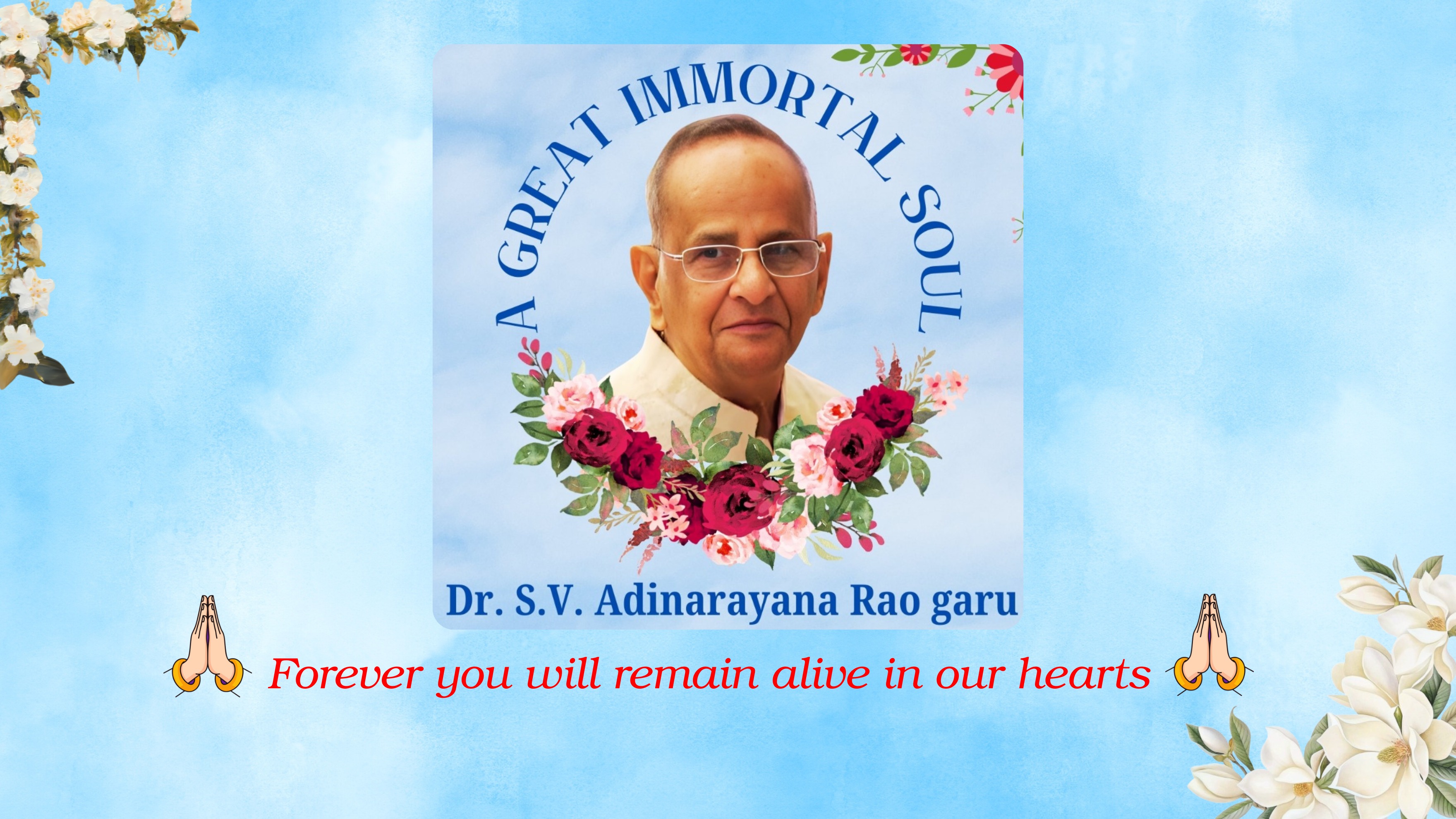
A Heartfelt Tribute to Dr. S.V. Adinarayana Rao Garu
Dr. S. V. Adinarayana Rao was not only a gifted orthopedic surgeon but a compassionate human being whose life’s work restored dignity, mobility, and h...
Read More →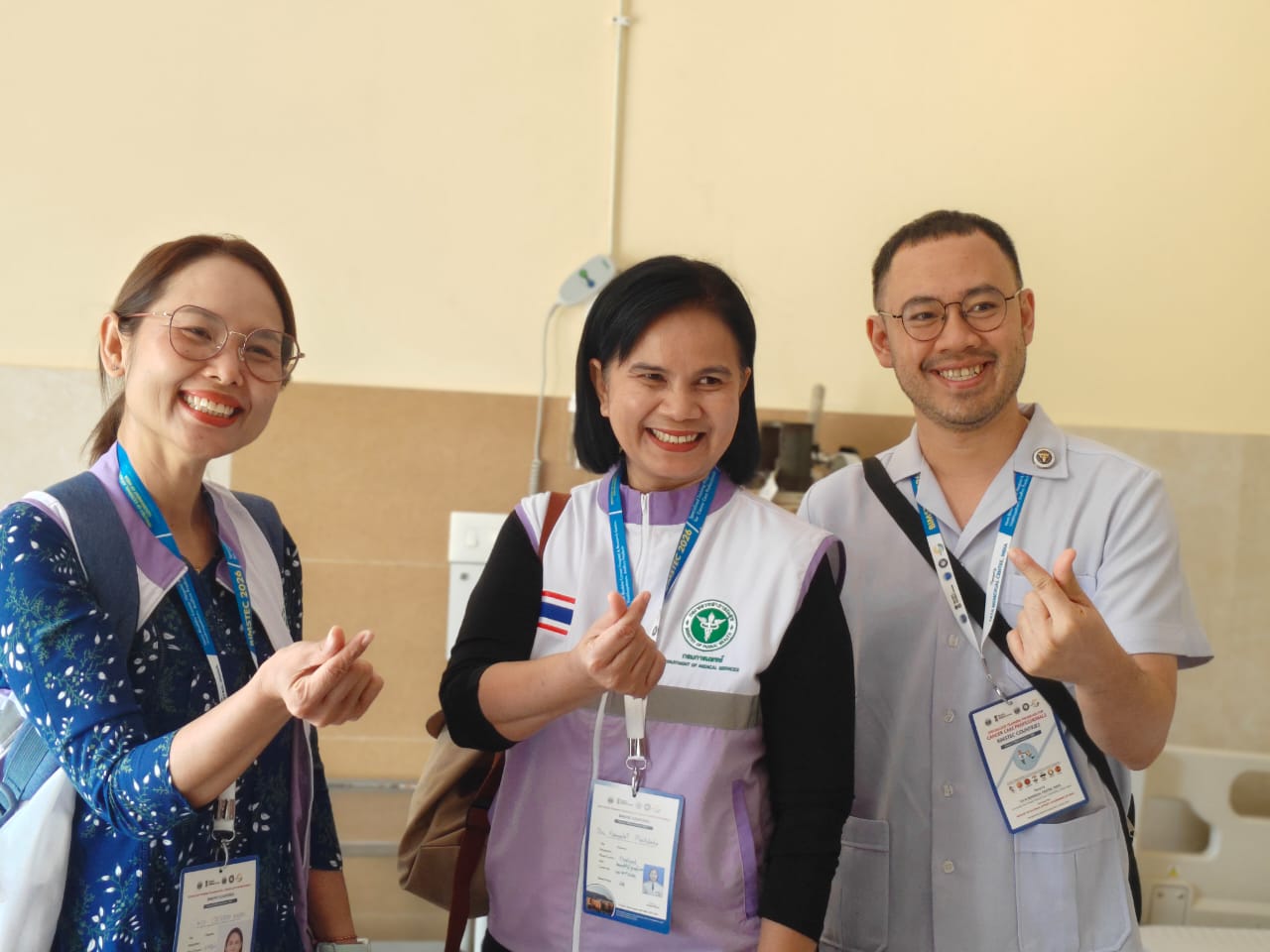
Global Collaboration - South Asian Doctors Visit Age Care Foundation
We were honored to host a delegation of esteemed doctors from across South Asia who visited our Integrated Centre for Geriatric and Palliative Care. T...
Read More →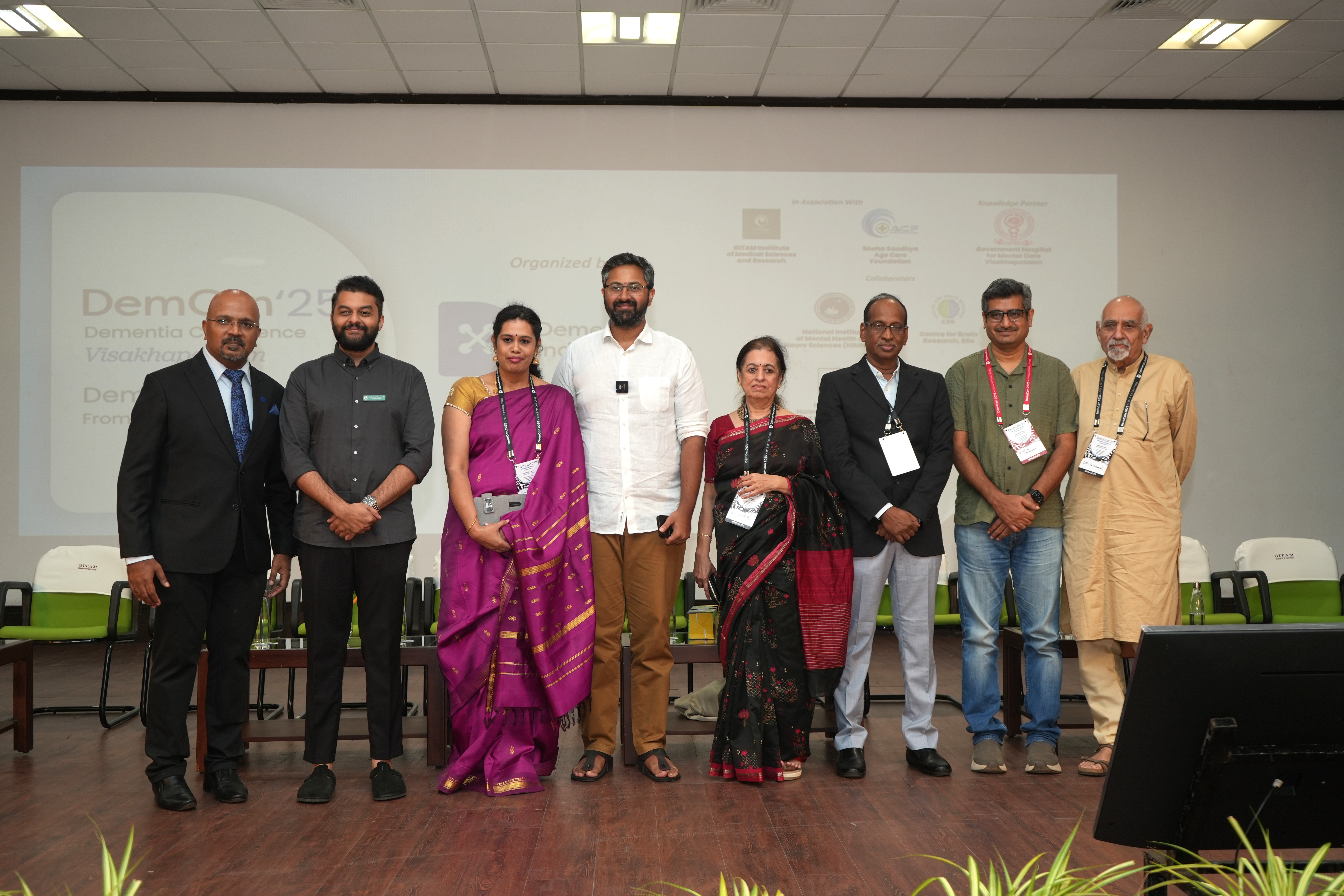
DemCon’25 A Conference for Compassionate Dementia Care
Visakhapatnam | 5–6 December 2025 Sneha Sandhya Age Care Foundation marked a strategic milestone in its advocacy and academic engagement by successful...
Read More →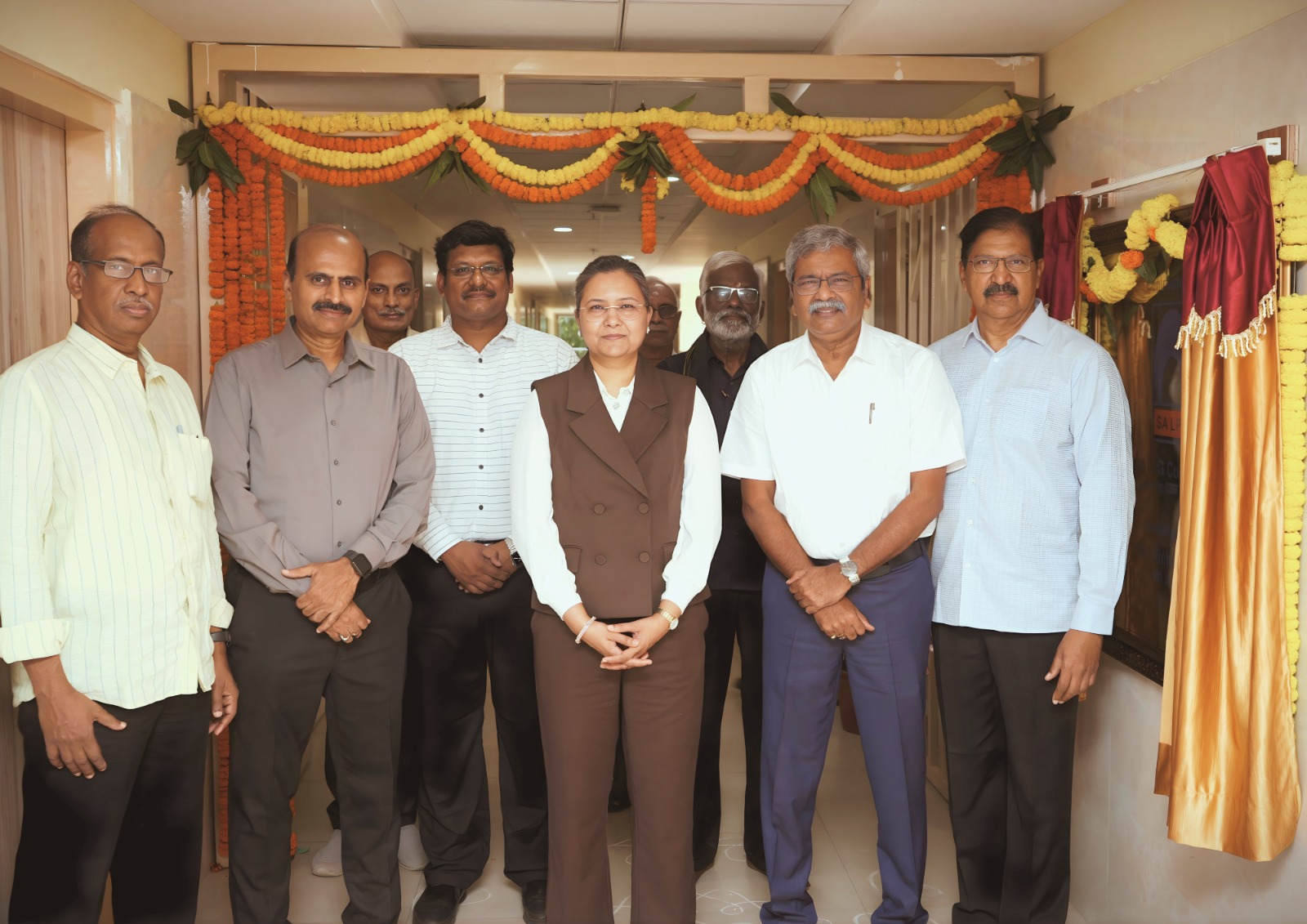
A Shared Vision of Healing, Hope & Humanity
On 11 November 2025, Sneha Sandhya Age Care Foundation advanced its mission with another decisive milestone as South Asia LPG Company Pvt. Ltd. (SALPG...
Read More →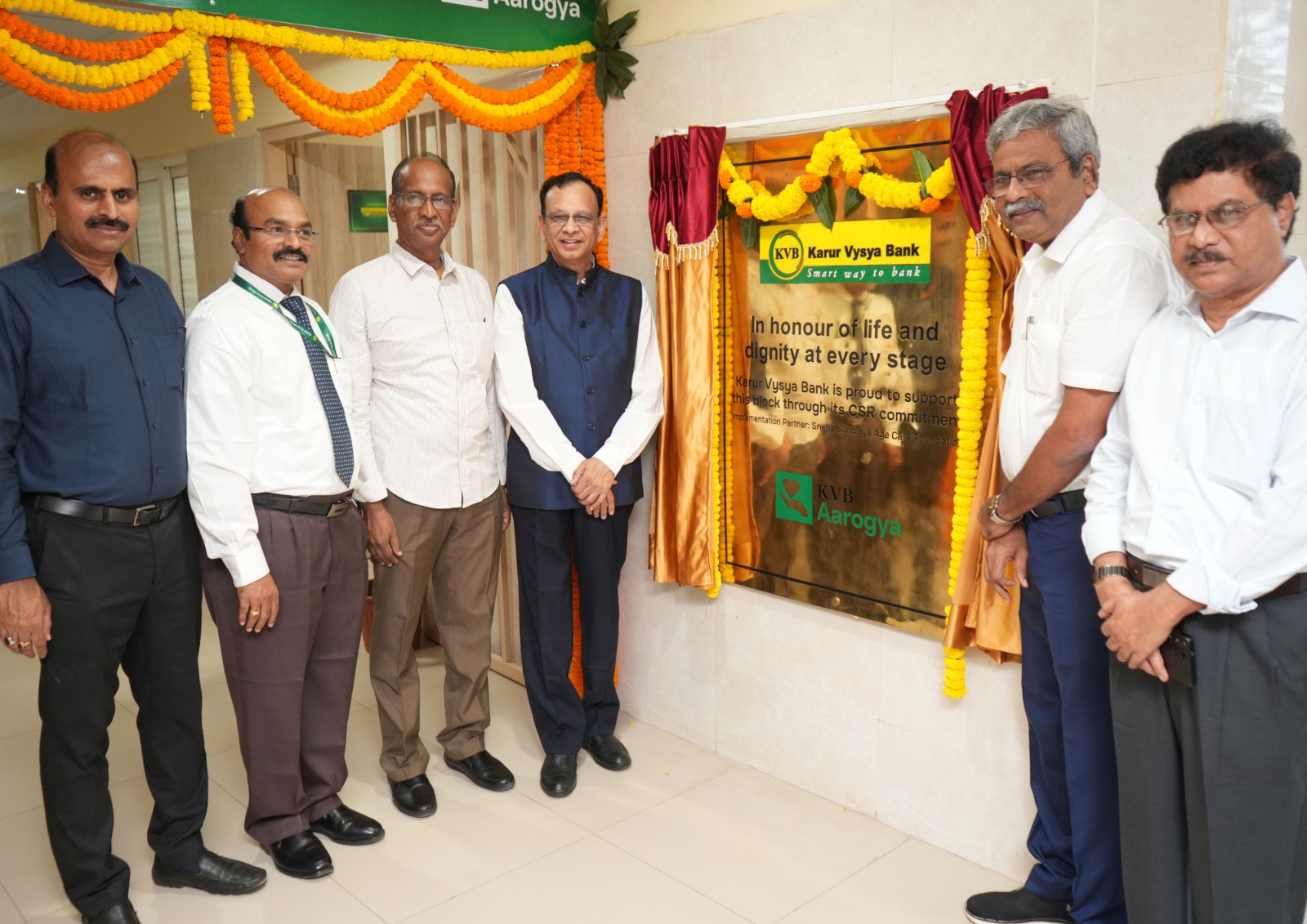
Launch of Level-1 Palliative & Geriatric Care Wing (Block-C)
Sneha Sandhya Age Care Foundation has crossed a defining inflection point with the inauguration of Level-1, Block-C of its Integrated Palliative and G...
Read More →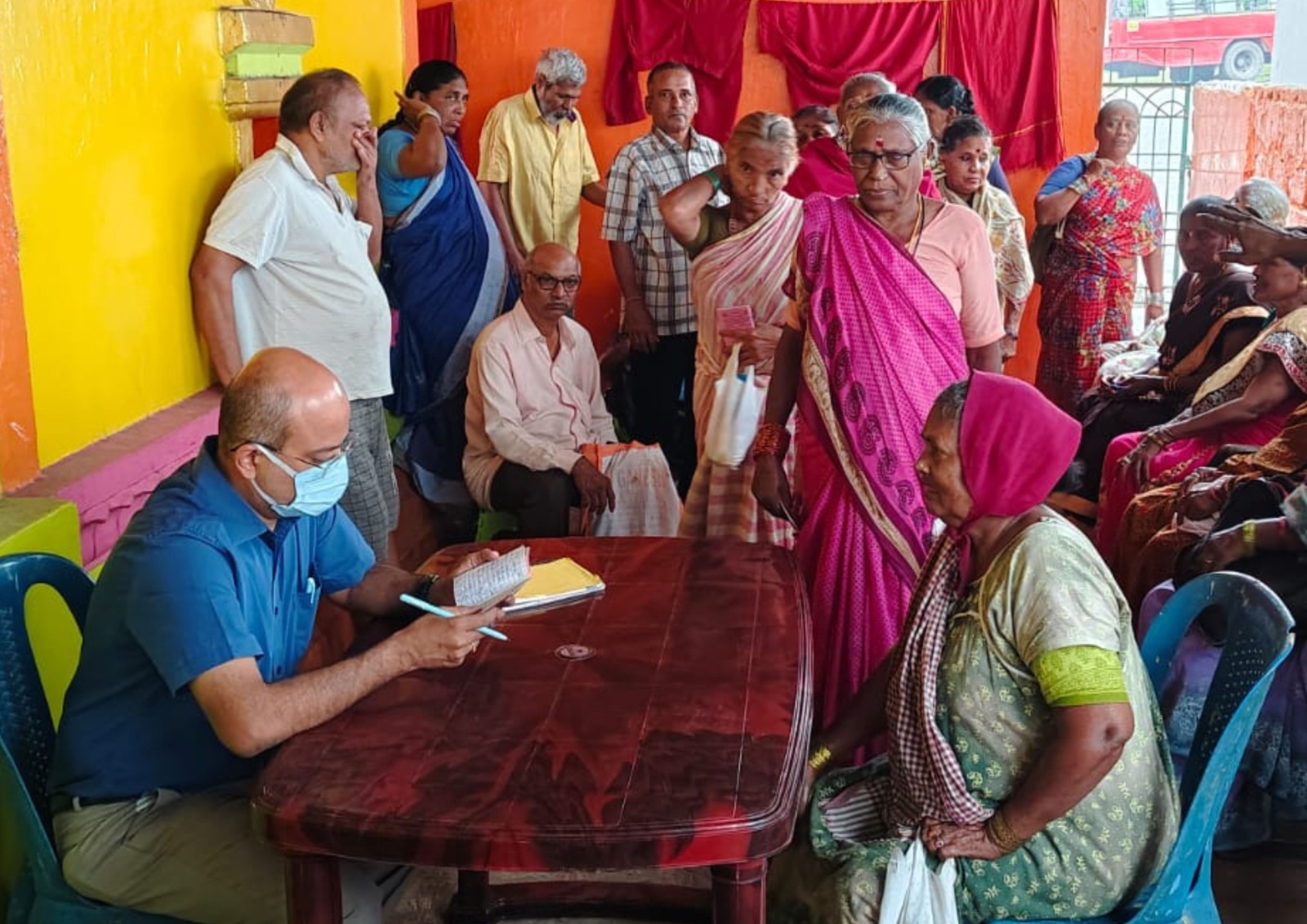
Outreach Geriatric Care Centers for Elderly & Seriously Ill
Outreach Geriatric Care Centers Sneha Sandhya Age Care Foundation Sneha Sandhya Age Care Foundation operates a structured outreach model delivering co...
Read More →Our Newsletters
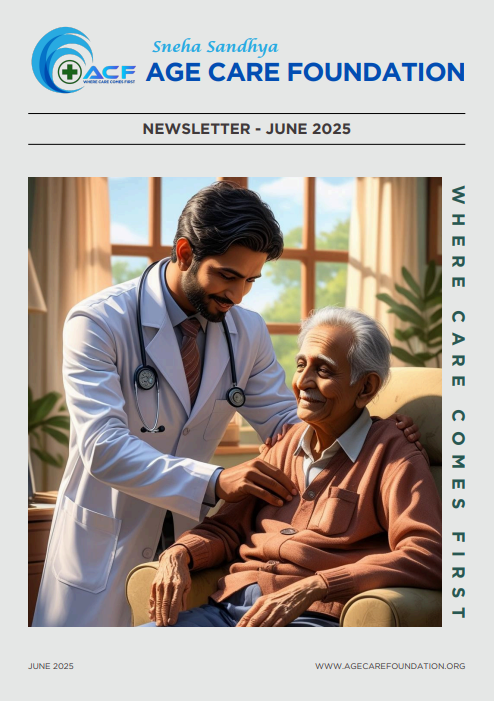
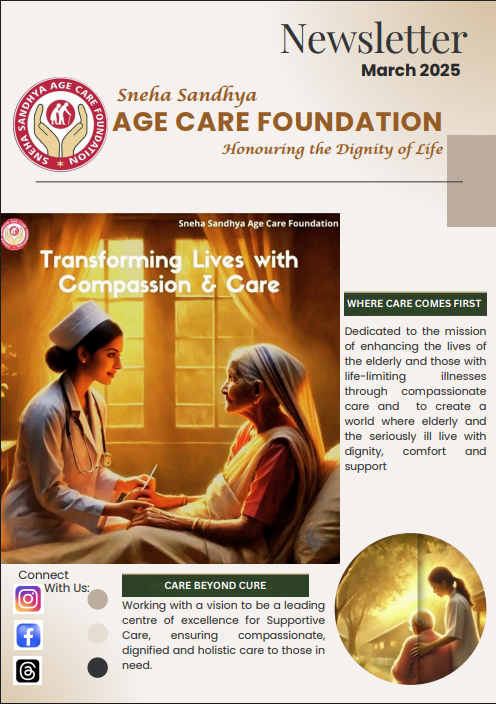
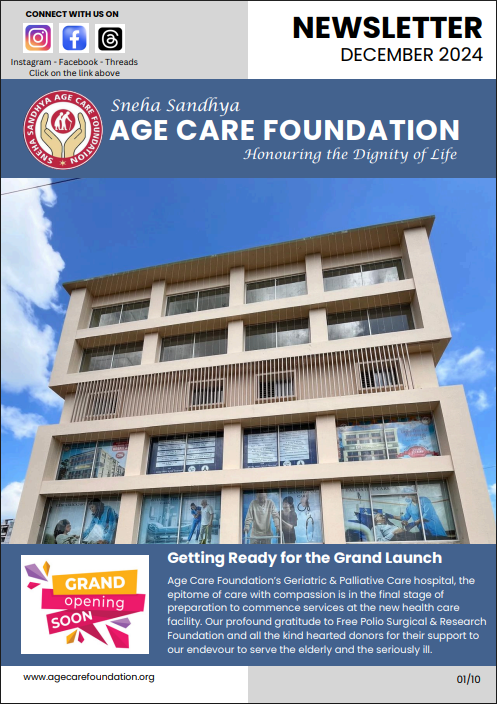
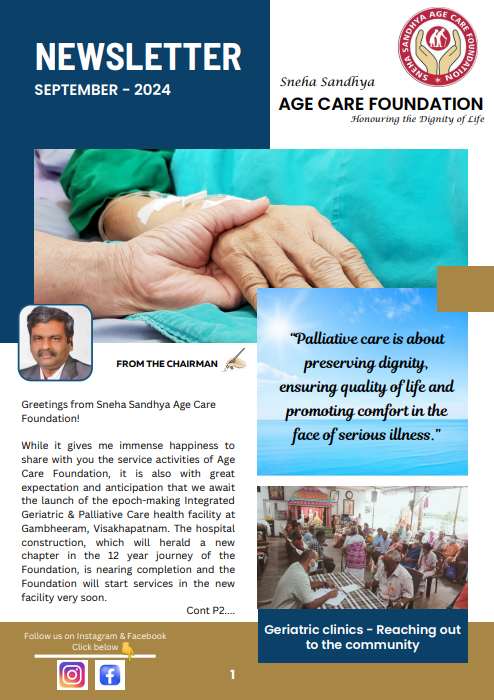
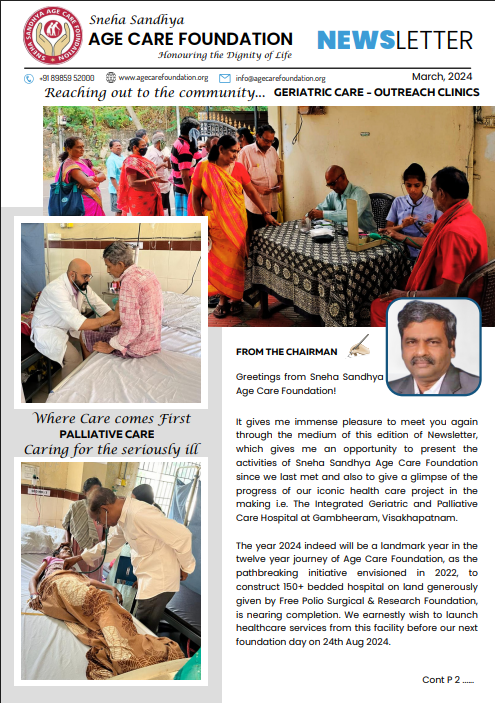
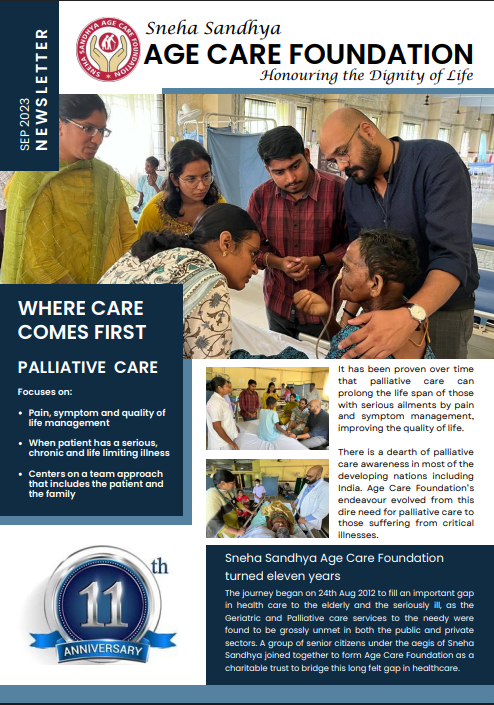
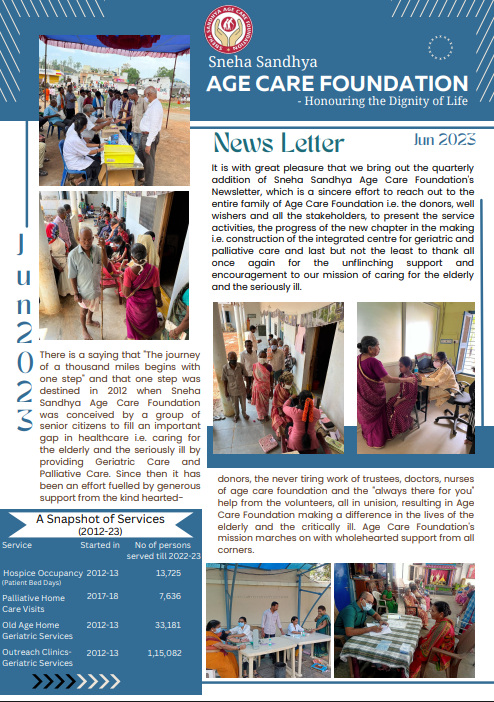
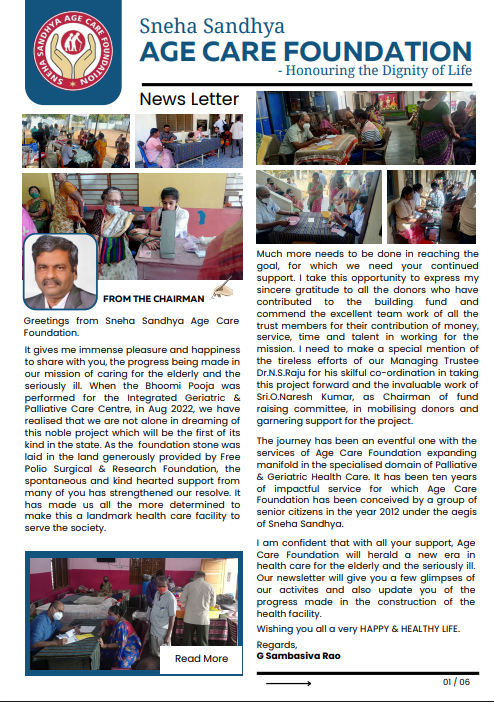
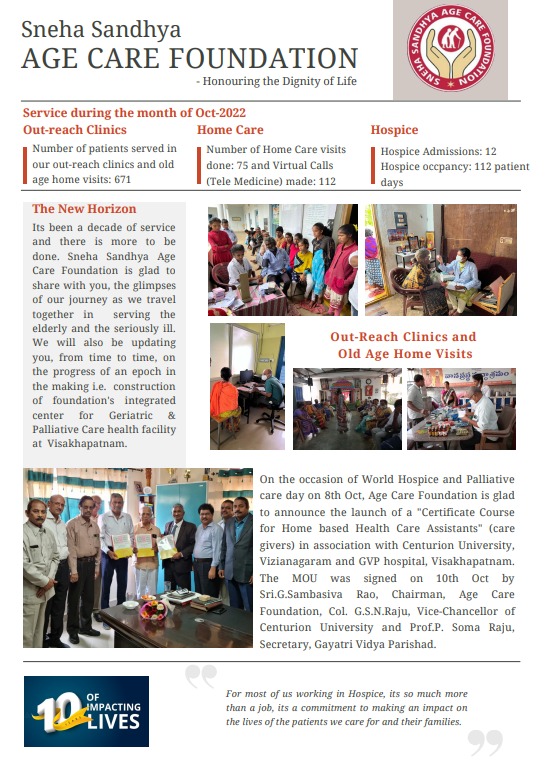
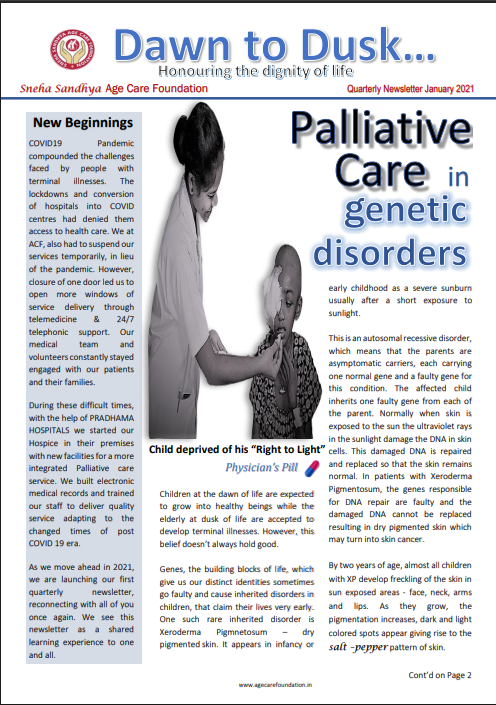
Stay updated with our latest newsletters. Click to read.
Videos
Dr Vidya Viswanath's talk at Palliative Care Congress in Vatican
Pallium India
A Caregiver's Prayer
jeanie powell
A journey Let's Talk Series
milfordcarecentre
Palliative Care: YOU Are a BRIDGE
Get Palliative Care
#LastWords
Last Words
a few days more (trailer)
Oorjaa-Power To Change
Books
In Being Mortal, bestselling author Atul Gawande tackles the hardest challenge of his profession: how medicine can not only improve life but also the process of its ending. Medicine has triumphed in modern times, transforming birth, injury, and infectious disease from harrowing to manageable. But in the inevitable condition of aging and death, the goals of medicine seem too frequently to run counter to the interest of the human spirit. Nursing homes, preoccupied with safety, pin patients into railed beds and wheelchairs. Hospitals isolate the dying, checking for vital signs long after the goals of cure have become moot. Doctors, committed to extending life, continue to carry out devastating procedures that in the end extend suffering. Gawande, a practicing surgeon, addresses his profession's ultimate limitation, arguing that quality of life is the desired goal for patients and families. Gawande offers examples of freer, more socially fulfilling models for assisting the infirm and dependent elderly, and he explores the varieties of hospice care to demonstrate that a person's last weeks or months may be rich and dignified. Full of eye-opening research and riveting storytelling, Being Mortal asserts that medicine can comfort and enhance our experience even to the end, providing not only a good life but also a good end.
When Breath Becomes Air chornicles the life of Paul Kalanithi who after having completed a decade long training as a neurosurgeon is confronted with being diagnosed of lung cancer. From being one who treated serious patients to being a patient with a terminal disease, Kalanithi started penning this auto-biography after he was diagnosed with inoperable lung cancer and was counting days. It is a moving story about Kalanithi’s own life: from being a student pondering over the meaningfulness of life to a famous neurosurgeon who operated brains that deals with the core of human identity, to being a new father at a time when his own life is awaiting an uncanny end. In writing about his own life, Kalanithi puts forth some reflecting questions: what is a person supposed to do when his life is catastrophically cut off? What makes a life admirable and worth living right in the face of death? And, finally, what does it mean to have a child right when one’s own life is on the verge of perennial slumber? Paul Kalanithi passed away while working on the book yet 'When Breath Becomes Air’ is regarded as a profound reflection on the acceptance of mortality and on the relationship between a patient and a doctor, all from an author, who had to face it all. About the author Paul Kalanithi: A neurosurgeon who took to writing, Paul Kalanithi held degrees in human biology, English Literature and history and philosophy of science and medicine from Cambridge and Stanford Universities before finally graduating from Yale School of Medicine. He was also bestowed with the highest award for research in the field of medicine by the American Academy of Neurological Surgery.
After too many years of unfulfilling work, Bronnie Ware began searching for a job with heart. Despite having no formal qualifications or experience, she found herself working in palliative care. Over the years she spent tending to the needs of those who were dying, Bronnie's life was transformed. Later, she wrote an Internet blog about the most common regrets expressed to her by the people she had cared for. The article, also called The Top Five Regrets of the Dying, gained so much momentum that it was read by more than three million people around the globe in its first year. At the requests of many, Bronnie now shares her own personal story. Bronnie has had a colorful and diverse past, but by applying the lessons of those nearing their death to her own life, she developed an understanding that it is possible for people, if they make the right choices, to die with peace of mind. In this book, she expresses in a heartfelt retelling how significant these regrets are and how we can positively address these issues while we still have the time. The Top Five Regrets of the Dying gives hope for a better world. It is a story told through sharing her inspiring and honest journey, which will leave you feeling kinder towards yourself and others, and more determined to live the life you are truly here to live. This delightful memoir is a courageous, life-changing book. About the author Through her work Bronnie Ware weaves delightful tales of real life observations and experience. Using gentleness, honesty and humour, Bronnie celebrates both the strength and vulnerability of human nature. Her message is a positive and inspiring one. As well as performing her own songs, Bronnie runs an online personal growth and songwriting course, writes a well-loved blog called Inspiration and Chai, including articles that have been translated into several languages, and is the author of the full-length memoir, The Top Five Regrets of the Dying : A Life Transformed by the Dearly Departing.
Winner of the Pulitzer Prize, and now a documentary from Ken Burns on PBS, The Emperor of All Maladies is a magnificent, profoundly humane “biography” of cancer—from its first documented appearances thousands of years ago through the epic battles in the twentieth century to cure, control, and conquer it to a radical new understanding of its essence. Physician, researcher, and award-winning science writer, Siddhartha Mukherjee examines cancer with a cellular biologist’s precision, a historian’s perspective, and a biographer’s passion. The result is an astonishingly lucid and eloquent chronicle of a disease humans have lived with—and perished from—for more than five thousand years. The story of cancer is a story of human ingenuity, resilience, and perseverance, but also of hubris, paternalism, and misperception. Mukherjee recounts centuries of discoveries, setbacks, victories, and deaths, told through the eyes of his predecessors and peers, training their wits against an infinitely resourceful adversary that, just three decades ago, was thought to be easily vanquished in an all-out “war against cancer.” The book reads like a literary thriller with cancer as the protagonist. From the Persian Queen Atossa, whose Greek slave may have cut off her diseased breast, to the nineteenth-century recipients of primitive radiation and chemotherapy to Mukherjee’s own leukemia patient, Carla, The Emperor of All Maladies is about the people who have soldiered through fiercely demanding regimens in order to survive—and to increase our understanding of this iconic disease. Riveting, urgent, and surprising, The Emperor of All Maladies provides a fascinating glimpse into the future of cancer treatments. It is an illuminating book that provides hope and clarity to those seeking to demystify cancer.
He was a Senior doctor in a prestigious teaching hospital in Bangalore. He was suffering from oesophageal cancer and knew he would die very shortly. Before he died he penned a few words and shared the same with his classmates. *The Day I Die* On the day I die a lot will happen. A lot will change. The world will be busy.On the day I die, all the important appointments I made will be left unattended. The many plans I had yet to complete will remain forever undone. The calendar that ruled so many of my days will now be irrelevant to me. All the material things I so chased and guarded and treasured will be left in the hands of others to care for or to discard. The words of my critics which so burdened me will cease to sting or capture anymore. They will be unable to touch me. The arguments I believed I’d won here will not serve me or bring me any satisfaction or solace. All my noisy incoming notifications and texts and calls will go unanswered. Their great urgency will be quieted. My many nagging regrets will all be resigned to the past, where they should have always been anyway. Every superficial worry about my body that I ever labored over; about my waistline or hairline or frown lines, will fade away. My carefully crafted image, the one I worked so hard to shape for others here, will be left to them to complete anyway. The sterling reputation I once struggled so greatly to maintain will be of little concern for me anymore. All the small and large anxieties that stole sleep from me each night will be rendered powerless. The deep and towering mysteries about life and death that so consumed my mind will finally be clarified in a way that they could never be before while I lived. These things will certainly all be true on the day that I die. Yet for as much as will happen on that day, one more thing that will happen. On the day I die, the few people who really know and truly love me will grieve deeply. They will feel a void. They will feel cheated. They will not feel ready. They will feel as though a part of them has died as well. And on that day, more than anything in the world they will want more time with me. I know this from those I love and grieve over. And so knowing this, while I am still alive I’ll try to remember that my time with them is finite and fleeting and so very precious—and I’ll do my best not to waste a second of it. I’ll try not to squander a priceless moment worrying about all the other things that will happen on the day I die, because many of those things are either not my concern or beyond my control. Friends, those other things have an insidious way of keeping you from living even as you live; vying for your attention, competing for your affections. They rob you of the joy of this unrepeatable, uncontainable, ever-evaporating Now with those who love you and want only to share it with you. Don’t miss the chance to dance with them while you can. It’s easy to waste so much daylight in the days before you die. Don’t let your life be stolen every day by all that you believe matters, because on the day you die, much of it simply won’t. Yes, you and I will die one day. But before that day comes, let us live..... Yes, *LIVE, don't simply exist!*